
Table of Contents
What Is an Executive Training Program?
An executive training program is a structured learning course built for senior leaders people like CEOs, directors, and top managers to help them lead better, think more strategically, and manage change with confidence. It is not a regular staff training. It is designed specifically for people at the top of an organisation, or those about to get there.
For Nigerian businesses, this matters more than ever. The business environment keeps changing fast new technology, new regulations, and tougher competition. A leader who stops learning quickly falls behind. An executive training program gives business owners and top managers the tools to lead well, even when things get complicated.
In this guide, we’ll break down what an executive training program really is, the different types available, how much they cost, and how to pick the right one for your business or career. We’ll also show you real examples, common mistakes, and where you can find upcoming programs designed for Nigerian leaders.
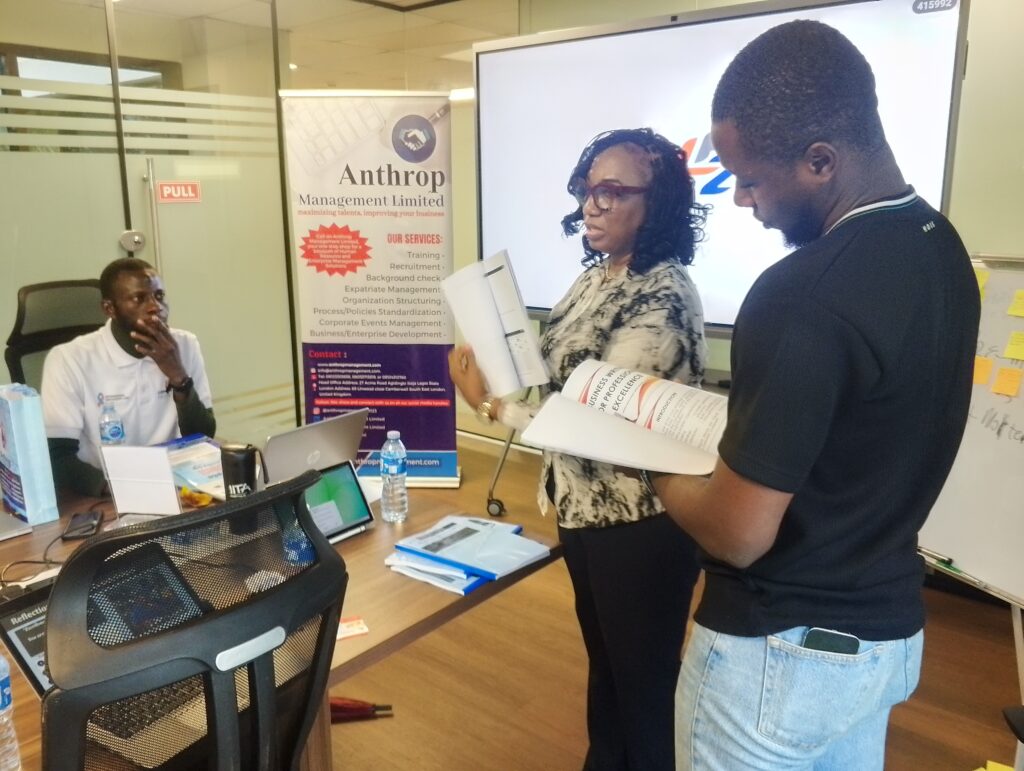
What This Means (In Simple Words)
Think of an executive training program like a “leadership gym.” Just as an athlete trains to get physically stronger, a business leader trains to get mentally and strategically stronger. Instead of lifting weights, executives learn skills like decision-making, strategic management, and leading people through change.
For example, imagine the founder of a growing retail business in Abuja. She’s good at sales, but she’s never formally learned how to manage a large team, read financial reports, or plan a five-year strategy. An executive training program would teach her exactly those skills, in a short, focused course without her needing to go back to school for years.
These programs can last a few days, a few weeks, or a few months. Some happen in a classroom. Others happen fully online. What connects them all is the goal: helping senior people lead better.
Why Executive Training Programs Matter in Nigeria
Nigerian businesses face unique pressures a fast-changing economy, currency instability, and a competitive job market for skilled workers. Leaders need more than good instincts to survive this. They need sharpened skills. Here’s why executive training matters so much here:
- It closes the leadership gap. Many Nigerian businesses are led by people who are excellent at the “hustle” but never had formal leadership training.
- It supports digital transformation. Business is moving online fast. Leaders need to understand technology, not just delegate it.
- It improves decision-making under pressure. Nigerian leaders often manage a lot with limited resources. Training sharpens judgment.
- It boosts investor and partner confidence. A well-trained leadership team looks more credible to banks, investors, and partners.
- It reduces costly leadership mistakes. Poor strategic decisions can cost a business far more than the price of good training.
Executive training programs for businesses are no longer a luxury reserved for big multinational companies. Small and mid-sized Nigerian businesses are now investing in them too, because the returns show up quickly in better decisions, stronger teams, and steadier growth.
Subscribe to get exclusive insights you won’t find anywhere else.
Types of Executive Training Programs
Not all executive training looks the same. Here are the main types you’ll come across:
- Leadership development programs focused on building confident, capable leaders at every level.
- Strategic management courses teach leaders how to plan and execute long-term business strategy.
- Change management training helps leaders guide their teams through big changes, like restructuring or new technology.
- Digital transformation programs prepare executives to lead businesses through digital tools and online growth.
- C-suite development programs built specifically for top-level executives like CEOs, CFOs, and COOs.
- Industry-specific programs tailored training for sectors like banking, oil and gas, healthcare, or manufacturing.
- Executive certificate programs shorter courses that end with a certificate, often used to boost a CV or LinkedIn profile.
Choosing the right type depends on your goals whether you want broad leadership skills or something focused on a specific challenge your business is facing.
Who Should Attend Executive Training?
Executive training isn’t only for people with “Chief” in their title. It’s useful for:
- Business owners and founders who never had formal management education.
- Senior managers preparing to step into a director or executive role.
- Department heads who now manage bigger teams and bigger budgets.
- Board members who need to understand strategy and governance better.
- High-potential employees being groomed for future leadership roles.
If a person’s decisions affect the direction of the business even a small business they are a good candidate for executive training.
Online vs In-Person Executive Training
Both formats work, but they suit different needs.
In-person training offers:
- Real face-to-face networking with other leaders
- Fewer distractions during sessions
- Hands-on group exercises and role play
Online executive training offers:
- Flexibility for busy schedules
- Lower travel and accommodation costs
- Access to international programs without leaving Nigeria
Many Nigerian executives now choose a mix of both a “blended” approach, where some sessions happen online and others happen in person for deeper, hands-on learning.
Also read; How To Improve Training And Development In The Workplace
Executive Training Formats and Durations
Executive training doesn’t follow one fixed format. Common options include:
- Short intensive workshops one to three days, focused on a single skill like negotiation or public speaking.
- Multi-week courses spread over several weeks, usually a few hours per session.
- Executive certificate programs typically a few weeks to a few months, ending with a formal certificate.
- Ongoing executive coaching one-on-one sessions that continue over months, tailored to the individual.
Shorter formats work well for busy executives who cannot step away from the business for long. Longer formats work better for deep, lasting change in leadership style.
How to Choose the Right Executive Training Program
With so many options, choosing the right program can feel overwhelming. Use this checklist:
- Define the problem first. Are you trying to improve strategy, communication, or digital skills?
- Check the facilitator’s experience. Has the trainer actually led or advised real businesses?
- Look at the format. Does it fit your schedule, short workshop or longer course?
- Ask about customisation. Can the content be adjusted to fit your industry or company size?
- Consider the cost versus the value. A cheaper course that doesn’t solve your real problem is not a bargain.
- Check for local relevance. A program built for the Nigerian business environment will be more useful than a generic global course with no local context.
You can view our upcoming programs designed specifically for Nigerian leaders here: Executive Training Programmes.
Subscribe to get exclusive insights you won’t find anywhere else.
Executive Training vs MBA Programs
People often confuse executive training with an MBA, but they are quite different.
| Feature | Executive Training | MBA |
|---|---|---|
| Duration | Days to a few months | 1–2 years |
| Cost | Lower | Much higher |
| Focus | Practical, specific skills | Broad business theory |
| Format | Flexible, often part-time | Structured academic program |
| Certificate | Often a certificate | Full academic degree |
Big business schools like Harvard Business School, INSEAD, and Wharton Executive Education offer both full MBA programs and shorter executive education courses. If you need a quick, practical skill upgrade, executive training is usually the better and faster choice. If you’re building a long-term academic credential, an MBA may suit you better.
Industry-Specific Executive Training
Some challenges are unique to certain industries, so many programs are now built around specific sectors:
- Banking and finance risk management, regulatory compliance, financial strategy.
- Oil and gas operational leadership, safety governance, project management.
- Healthcare organisational behaviour, patient-focused leadership, resource management.
- Manufacturing operations strategy, supply chain leadership, change management.
- Retail and FMCG customer-focused leadership, digital transformation, brand strategy.
Choosing an industry-specific program means the case studies, examples, and lessons will feel familiar and directly useful to your day-to-day work.
Also read: 5 Leadership Training Programs For Managers
Executive Coaching vs Executive Training
These two are related, but they are not the same thing.
- Executive training is usually group-based, structured, and covers a set curriculum over a fixed period.
- Executive coaching is one-on-one, ongoing, and focused entirely on the individual’s personal growth, habits, and challenges.
Many senior leaders benefit from both training to build broad skills like strategic management or change management, and coaching to work through personal leadership style, confidence, or specific workplace relationships.
Corporate Executive Training Solutions
For companies rather than individuals, many training providers now offer corporate executive training solutions programs built specifically for one organisation’s leadership team, rather than open courses with mixed participants.
Benefits of corporate (in-house) training include:
- Content tailored to your company’s real challenges
- Confidentiality to discuss internal issues freely
- Stronger team bonding, since the whole leadership group trains together
- Better alignment, since everyone learns the same language and framework
Some companies combine this with a company retreat, so leadership training happens alongside team bonding in a relaxed setting. If you’re exploring that combination, our guide on Company Retreat Ideas That Actually Work is a useful next read.
Common Mistakes Businesses Make With Executive Training
- Choosing a program based on price alone. The cheapest option is not always the most useful one.
- Ignoring the “after” plan. Sending a leader for training without a plan to apply what they learned wastes the investment.
- Picking generic, one-size-fits-all courses. Programs with no local or industry context often feel disconnected from real challenges.
- Not involving the right people. Sometimes the wrong person is sent, instead of the one who actually needs the skill.
- Treating it as a one-time event. Leadership growth is ongoing. A single course rarely fixes deep, long-term gaps.
- Skipping follow-up measurement. Without checking results afterward, it’s hard to know if the training actually worked.
Step-by-Step Guide to Getting Started With Executive Training
- Identify the leadership gap you want to close strategy, communication, digital skills, or something else.
- Decide who needs it one executive, a small leadership team, or the whole management group.
- Set a budget that reflects the real cost of the problem you’re solving.
- Compare providers, checking their experience with Nigerian or African businesses specifically.
- Choose a format that fits your schedule short workshop, multi-week course, or ongoing coaching.
- Enrol and prepare your team with clear expectations before the training starts.
- Apply and review what was learned, with a follow-up plan after the program ends.
Cost Breakdown: Executive Training in Nigeria vs International Programs
Costs vary widely, but here’s what generally affects the price:
- Local Nigerian programs are typically far more affordable, since there’s no international travel, visa, or accommodation cost involved.
- International programs, such as those from top global business schools, cost significantly more once you add tuition, flights, visas, and accommodation.
- Group corporate training is usually more cost-effective per person than sending individuals to open enrolment courses one at a time.
- Certificate programs tend to cost less than full multi-month leadership development tracks.
For most Nigerian businesses, a well-designed local executive training program delivers strong value practical, relevant, and far more affordable than flying executives abroad for similar content.
Also read: Executive Board Training: The Complete Guide For CEOs, Board Members, And Business Leaders
Subscribe to get exclusive insights you won’t find anywhere else.
Executive Training ROI and Business Impact
Business owners often ask: is executive training actually worth the money? The honest answer is, it depends on how well it’s applied. Here’s how to measure the return on investment (ROI):
- Track decision quality. Are leaders making faster, clearer decisions after training?
- Watch team performance. Do teams under trained leaders show improved output or morale?
- Measure retention. Are trained leaders staying longer and growing within the company?
- Review business outcomes. Look at whether strategic goals are being met more consistently.
- Collect feedback. Ask leaders and their teams directly whether leadership behaviour has visibly improved.
The real ROI of executive training shows up gradually in stronger decisions, better morale, and fewer costly mistakes rather than as one single, instant result.
A Real-World Nigerian Business Example
The problem: A mid-sized manufacturing company in Ogun State was struggling with slow decision-making. The founder made every major decision alone, and his senior managers were unsure how to plan or act without waiting for his approval. This was slowing down production and frustrating good staff.
The solution: The company enrolled its top five managers in a short executive training program focused on strategic management and decision-making. Over three weeks, the managers learned frameworks for making confident decisions within clear boundaries, without needing the founder’s sign-off on every small matter.
The result: Within two months, approval delays dropped noticeably. Managers began solving problems on their own, and the founder had more time to focus on big-picture strategy instead of daily operations. The training didn’t just teach theory it directly fixed a real bottleneck in the business.
Benefits of Executive Training for Business Growth
- Faster, smarter decisions at every level of leadership.
- Stronger succession planning, since more people are equipped to lead.
- Better change management, especially during growth, restructuring, or digital transformation.
- Improved business acumen across the leadership team, not just at the very top.
- Higher staff retention, since employees prefer working under confident, well-trained leaders.
- Stronger reputation, which helps attract investors, partners, and top talent.
Frequently Asked Questions
What is an executive training program?
It’s a structured course designed to help senior leaders build skills like strategy, decision-making, and leading change, usually over a short, focused period.
How does executive training differ from other professional development?
General professional development often covers broad skills for any employee. Executive training is specifically built for senior leaders and focuses on strategic, high-level decision-making.
How long do executive training programs typically last?
They range from a few days for short workshops to a few months for certificate programs. It depends on the depth of the content and your schedule.
What qualifications do I need to enroll in executive training?
Most programs don’t require specific academic qualifications. What matters most is your role or level of responsibility in your organisation.
Who needs executive training?
Business owners, senior managers, department heads, board members, and high-potential employees preparing for leadership roles all benefit from it.
How do I measure the ROI of executive training for my team?
Track decision quality, team performance, staff retention, and business outcomes before and after the training to see real impact over time.
Conclusion
An executive training program is one of the smartest investments a Nigerian business can make in its leadership. It builds sharper decision-making, stronger strategic thinking, and more confident leaders skills that directly affect how well a business grows and survives tough times. Whether you choose a short workshop, a certificate program, or ongoing executive coaching, the goal stays the same: better-equipped leaders make better businesses.
Ready to Invest in Your Leadership Team?
Our team provides HR consulting, recruitment, payroll, and compliance support for businesses in Nigeria, along with executive leadership training designed for the realities of the Nigerian business environment. Contact us today to get started.
Explore our upcoming executive training programmes