
Table of Contents
A boardroom full of experienced people can still make bad decisions. That’s not a knock on intelligence it’s what happens when smart people never get formal training on how to actually govern. They know their industry. They don’t always know how to run a board.
Executive board training fixes that gap. It’s the structured, ongoing education that turns a room of accomplished individuals into a board that actually governs well one that manages risk, holds management accountable, and steers the company through both growth and crisis.
If you’re a CEO, board chairman, or non-executive director in Nigeria wondering whether this is worth the time and money, this guide answers everything: what it is, why it matters, what it costs, and how to choose a provider that won’t waste your board’s time. Executive Board Training: The Complete Guide for CEOs, Board Members, and Business Leaders in Nigeria.
What Is Executive Board Training?
Executive board training is structured learning designed specifically for people who sit on, or report to, a company’s board of directors. It’s different from general leadership training because it focuses on the specific job of governing not managing day-to-day operations.
Think of it this way: a great operations manager knows how to run a department. A great board member knows how to ask management the hard questions, read a balance sheet for warning signs, and know when the company is taking on too much risk. Those are learnable, teachable skills and they’re exactly what this training covers.
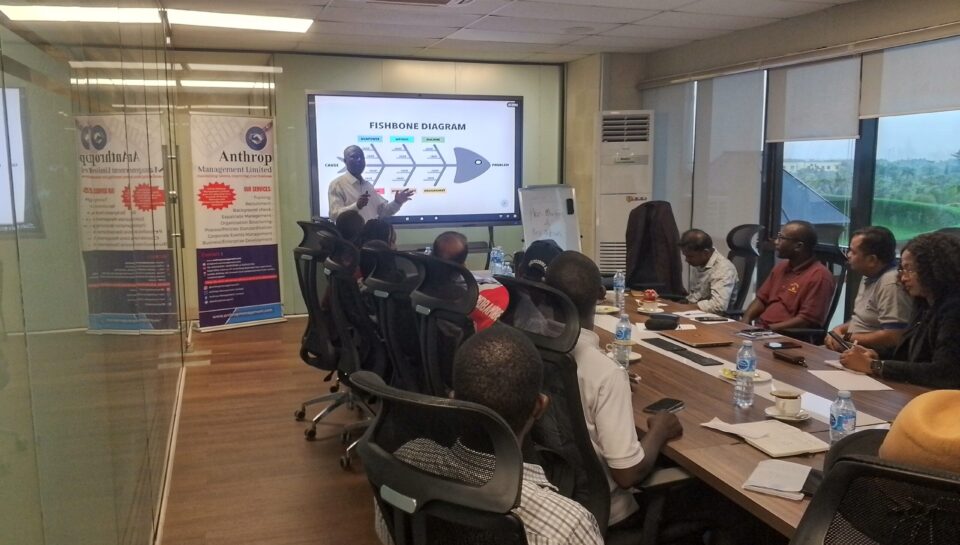
Programmes typically combine classroom sessions, case studies, and real board simulations. Some are delivered by professional bodies, others by consulting firms like Anthrop Management, and some are built in-house around a specific company’s challenges.
Why Is Executive Board Training Important?
Nigerian companies operate in a business environment where regulation is tightening, investors are asking harder questions, and reputational damage travels fast on social media. A board that doesn’t understand its legal duties is a liability, not an asset.
Here’s what good board training actually delivers:
- Reduces legal and regulatory exposure. Directors who understand the Companies and Allied Matters Act (CAMA) and sector-specific codes are far less likely to expose the company to sanctions.
- Improves decision quality. Trained boards ask sharper questions before approving major spending, mergers, or new markets.
- Builds investor confidence. Investors and lenders increasingly check governance quality before they check the balance sheet.
- Prepares for succession. A trained board can spot and prepare the next generation of leadership instead of scrambling when a CEO exits.
- Protects the company’s reputation. Governance failures fraud, conflicts of interest, poor oversight are usually board failures first.

Who Should Attend Executive Board Training?
Board training isn’t just for new directors ticking a compliance box. It’s ongoing education for anyone with governance responsibility, including:
- CEOs
- Board Chairmen
- Executive Directors
- Non-Executive Directors
- Company Secretaries
- Chief Financial Officers (CFOs)
- HR Directors
- Senior Executives being groomed for board roles
Even directors who’ve served for years benefit governance codes change, risks evolve (cybersecurity wasn’t a board-level topic a decade ago; now it’s central), and every board needs a shared vocabulary for how it makes decisions.
What Are the Responsibilities of an Executive Board?
Before training can improve a board, it helps to be clear on what the board is actually there to do. Broadly, an executive board is responsible for:
- Setting strategy — approving the company’s direction and major decisions, not running operations day to day.
- Overseeing management — hiring, evaluating, and if necessary replacing the CEO and senior executives.
- Managing risk — identifying what could go wrong (financial, operational, reputational) and making sure it’s controlled.
- Ensuring compliance — meeting legal, regulatory, and reporting obligations.
- Protecting shareholder and stakeholder interests — balancing the interests of owners, employees, customers, and the wider public.
- Governance of the board itself — deciding board composition, running effective meetings, and evaluating its own performance.
Under the Nigerian Code of Corporate Governance 2018, board responsibilities are organized around six governance pillars, expressed through 28 principles that companies are expected to apply and explain. That “apply and explain” approach rather than a rigid checklist is exactly why board members need training: the code expects judgment, not just box-ticking.
What Topics Should Executive Board Training Cover?
A comprehensive programme should go well beyond generic leadership advice. Look for training that covers:
| Topic | Why It Matters |
|---|---|
| Corporate governance | The legal and ethical framework directors must operate within |
| Strategic leadership | Setting and monitoring long-term direction, not just approving budgets |
| Risk management | Spotting financial, operational, and reputational risk before it becomes a crisis |
| Financial oversight | Reading financial statements critically, not just receiving them |
| Compliance | Staying current with CAMA, sector codes, and regulatory reporting |
| ESG (Environmental, Social, Governance) | Increasingly demanded by investors, lenders, and international partners |
| Cybersecurity | Understanding digital risk as a board-level issue, not just an IT problem |
| Succession planning | Preparing for leadership transitions before they’re forced |
| Ethics | Setting the tone from the top on conflicts of interest and integrity |
| Crisis management | How the board should behave and communicate when things go wrong |
If a training provider’s outline skips risk, compliance, or succession planning, that’s a red flag. Those three are where most Nigerian boards actually get tested.
How Executive Board Training Improves Corporate Governance
Governance codes only work if the people applying them understand the reasoning behind the rules, not just the letter of them. Training closes that gap in a few concrete ways:
- It teaches directors to ask “why” before approving management’s recommendations, instead of rubber-stamping them.
- It builds a common language for discussing risk, so the board isn’t relying on one or two members to flag problems.
- It clarifies where the line sits between the board’s strategic role and management’s operational role a boundary that gets blurred often in founder-led Nigerian companies.
- It improves board meeting discipline. The 2018 code requires boards to meet at least four times a year, but frequency alone doesn’t guarantee quality trained boards run meetings that actually produce decisions, not just updates.
Board Training vs Leadership Training: What’s the Difference?
These two get confused constantly, so it’s worth being precise.
Leadership training develops a person’s ability to manage people, projects, and operations. It’s about execution hitting targets, running teams, delivering results.
Board training develops a person’s ability to govern to oversee, question, and hold accountable the people who execute. A brilliant operational leader can still be a weak board member if they’ve never learned to step back from “doing” into “overseeing.”
The two are complementary, not interchangeable. Many executives who move from a C-suite operating role onto a board struggle at first precisely because they keep trying to manage instead of govern. Board training is what makes that transition work.
How Often Should Board Members Receive Training?
There’s no single legal mandate on frequency in Nigeria, but industry practice points to a sensible rhythm:
- Induction training for every new director within their first few months on the board.
- Annual refresher sessions covering regulatory updates, emerging risks (like cybersecurity or ESG reporting requirements), and governance best practice.
- Ad-hoc training whenever the company faces a major change an IPO, a merger, entry into a new regulated sector, or a governance failure that needs addressing.
Boards that treat training as a one-time event rather than an ongoing practice tend to fall behind as regulation and risk evolve.
How Much Does Executive Board Training Cost in Nigeria?
Costs vary widely depending on the provider, format, and depth of the programme. As a general guide:
- Modular, professional-body training (such as programmes run by the Chartered Institute of Directors Nigeria, which prices modules from roughly ₦100,000 per module up to a combined ₦280,000 for three modules, or around ₦250,000 for a full standalone course sits at the more affordable, standardized end.
- Boutique consulting-led programmes, tailored to a specific board’s gaps and delivered in-house, tend to cost more but offer content built around your company’s actual risks rather than a generic curriculum.
- International-standard certification programmes (delivered by global bodies with a Nigerian presence) typically sit at the premium end, often priced in pounds or dollars plus exam fees.
The honest answer for most boards: a well-scoped, in-house programme from a firm that understands the Nigerian regulatory environment usually delivers better value than a generic, off-the-shelf course because it addresses your board’s real gaps instead of a textbook list of topics.
How to Choose the Right Executive Board Training Provider
Not all providers are equal. Before signing a contract, check for:
- Local regulatory knowledge. Do they understand CAMA, the Nigerian Code of Corporate Governance, and sector-specific codes (banking, insurance, pensions), or are they running a generic international curriculum?
- Real facilitators, not just theory. Has the trainer actually served on a board, or are they purely academic?
- Customization. Can the programme be built around your board’s actual composition and risks, or is it one-size-fits-all?
- Case studies relevant to Nigeria. Governance failures and successes from Nigerian or African companies land differently than borrowed Silicon Valley examples.
- Ongoing support, not just a one-off workshop — governance is a practice, not an event.
- Track record with organizations like yours — a training provider that has worked with HR consultancies, financial institutions, or mid-size private companies will understand your context better than one that’s only trained public-sector boards.
This is exactly the gap Anthrop Management’s Executive Board Training programme is built to close governance training grounded in Nigerian regulatory reality, not imported wholesale from elsewhere.
Frequently Asked Questions
What is executive board training?
It’s structured education for directors and senior executives on how to govern a company covering strategy oversight, risk, compliance, and ethics rather than how to manage day-to-day operations.
Who should attend?
CEOs, board chairmen, executive and non-executive directors, company secretaries, CFOs, HR directors, and senior executives preparing for board roles.
Is board training mandatory in Nigeria?
There’s no single blanket legal mandate requiring it for every company, but the Nigerian Code of Corporate Governance expects boards to have the skills and competence to fulfill their duties — which in practice means training is close to essential, and is mandatory in some regulated sectors like banking and insurance.
How long does training take?
It ranges from a single-day workshop on a specific topic (like cybersecurity governance) to multi-week modular certification programmes.
What qualifications should a trainer have?
Look for facilitators with actual board experience, recognized governance credentials, and familiarity with Nigerian corporate law not just a generic leadership-training background.
How much does it cost?
Modular professional-body courses often start around ₦100,000–₦280,000 per module or course; tailored in-house consulting programmes are typically priced separately based on scope.
How often should it be conducted?
Induction training for new directors, annual refreshers for the full board, and ad-hoc sessions around major company changes.
Can training be delivered in-house?
Yes, many companies prefer in-house programmes because they can be built around the board’s specific composition, industry, and risk profile, rather than a generic curriculum.
Final Thoughts: Invest in Your Board, Not Just Your Business
Every naira spent building products, marketing, or hiring talent can be undone by one bad board decision a risk nobody flagged, a compliance gap nobody caught, a succession crisis nobody planned for. Executive board training isn’t a luxury line item. It’s insurance for every other investment the company makes.
If your board hasn’t had formal governance training in the last year, that’s worth fixing now, not after a problem forces the issue.
Ready to strengthen your board’s governance capability? Talk to Anthrop Management about a tailored Executive Board Training programme built around your company’s actual risks, sector, and stage of growth not a generic template. Book a consultation today and give your board the tools it needs to protect and grow the business you’ve built.