
Table of Contents
Introduction
Human Resources Services in Nigeria help businesses hire the right people, pay them correctly, train them well, and keep them happy at work, without the owner having to do all of it alone. If you run a business in Lagos, Abuja, Port Harcourt, or anywhere else in Nigeria, you already know that people problems can slow down even the best business idea. A good staff member can resign without warning. A payroll mistake can bring a query from the tax office. A bad hire can waste months of salary and training time.
This is exactly why Human Resources Services in Nigeria exist. They give your business expert support for recruitment, payroll, training, compliance, and staff welfare, so you can spend your time growing the business instead of chasing paperwork and staff wahala. Whether you run a small shop with five workers, a fast-growing startup, or an established company with several branches, the way you manage your people will shape how far your business can grow. In this guide, we will explain what these services really mean, break down what they cost, show you real examples from Nigerian businesses, and walk you through how to choose the right HR partner for your specific stage of growth.
What This Means
Think of Human Resources, or “HR,” as everything that has to do with the people who work in your business. That includes finding them, paying them, training them, and helping them stay motivated. When people talk about “HR services,” they simply mean getting expert help with these jobs instead of handling everything yourself with no system in place.
For example, imagine you own a small logistics company in Lagos with 15 riders and 5 office staff. Without HR support, you might be the one interviewing riders, calculating salaries by hand, settling staff quarrels, and trying to remember who is due for a pay rise. An HR service provider steps in and handles all of this properly, using tested systems, so nothing falls through the cracks.
What Are Human Resources Services?
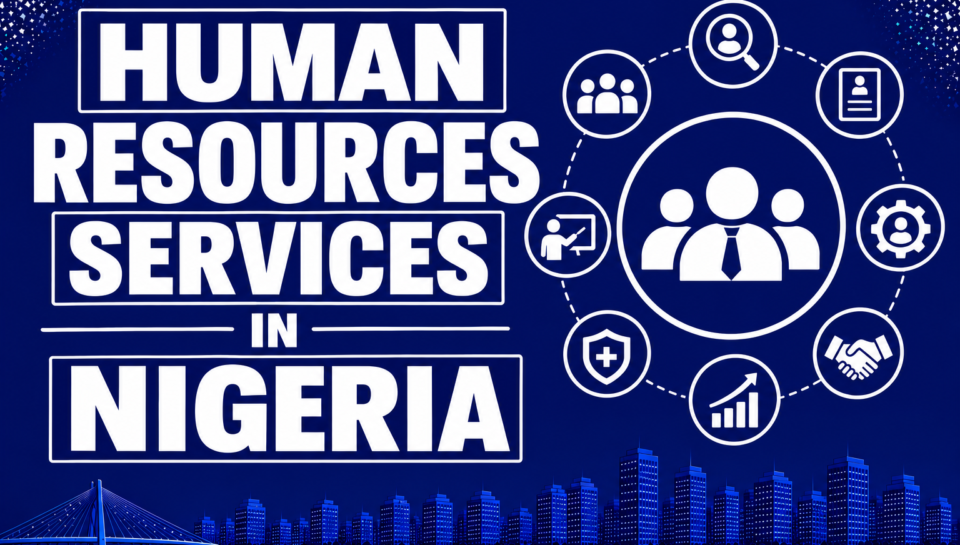
Human Resources Services in Nigeria cover the full range of support that helps a business manage its workforce. Depending on your provider, this can include:
- Finding and screening new staff (recruitment)
- Running payroll and paying salaries correctly and on time
- Training staff and managers
- Handling staff contracts, letters, and HR policies
- Managing employee performance and appraisals
- Keeping the business compliant with Nigerian labour laws
- Supporting staff welfare and workplace culture
Some businesses use HR services for just one need, like payroll. Others hand over the entire HR function to a consulting firm. Either way, the goal is the same: to manage your people the right way, without guesswork.
Why Human Resources Services Matter in Nigeria
Running a business in Nigeria comes with its own unique people challenges, and this is why Human Resources Services in Nigeria matter more than many owners realise.
1. The labour laws keep changing. Nigeria’s tax and pension rules, including PAYE, pension contributions, the National Housing Fund (NHF), and NSITF, are updated from time to time. A business without HR support can easily get these wrong and face penalties.
2. Good talent is hard to find and keep. Skilled workers in tech, finance, healthcare, and other fields are in high demand. Many also relocate abroad. Businesses that do not manage recruitment and employee engagement well end up losing their best people to competitors or “japa.”
3. Payroll errors damage trust fast. When staff are paid late or paid the wrong amount, morale drops immediately. In a country where many workers depend heavily on their monthly salary, this can cause serious problems for a business.
4. Small businesses rarely have in-house HR expertise. Many Nigerian SMEs are run by the founder or a small management team who wear many hats. HR is often the first function to be neglected, until it becomes a costly problem.
5. Remote and hybrid work is changing how people expect to be managed. More Nigerian employees now want flexible schedules, clear performance targets, and regular feedback, even in roles that used to be strictly office-based. Businesses without a proper HR structure often struggle to manage this shift fairly.
Human Resources Services in Nigeria solve these problems by bringing in experienced professionals who already understand the local labour environment.
Key Factors That Affect Which HR Services You Need
Not every business needs the same package of Human Resources Services in Nigeria. A few factors determine what should come first:
- Business size. A five-person team may only need payroll support, while a 100-staff company may need full HR outsourcing.
- Industry. A tech startup may prioritise fast Talent Acquisition, while a manufacturing company may prioritise compliance and safety documentation.
- Growth stage. A business that just raised funding or opened new branches will need recruitment and onboarding support quickly.
- Location. Lagos, Abuja, and other states may have slightly different state tax rules, which your HR partner should already understand.
- Budget. Some businesses start with one service, such as Payroll Outsourcing in Nigeria, and add more services as the company grows.
The Key HR Services Every Nigerian Business Should Know
Here are the core services that make up most HR support packages in Nigeria.
1. Candidate Sourcing and Talent Acquisition
Candidate Sourcing in Nigeria means actively finding qualified people for a job opening, rather than just waiting for applications to come in. Talent Acquisition goes a step further. It is a long-term strategy for attracting, hiring, and developing the right people for your business, not just filling an empty seat quickly.
A good HR partner will:
- Write clear job descriptions that attract the right candidates
- Search job boards, LinkedIn, and their own talent database
- Screen and shortlist candidates before you even see their CVs
- Conduct first-round interviews and background checks
- Recommend only candidates who genuinely fit the role and your company culture
This saves business owners weeks of wasted time interviewing unqualified candidates.
2. Payroll Outsourcing in Nigeria
Payroll Outsourcing in Nigeria means handing your salary calculations, tax deductions, and staff payments to an external HR provider. Instead of your accountant or office manager manually calculating PAYE, pension, and NHF every month, a payroll outsourcing partner automates and manages the entire process.
This typically covers:
- Monthly salary computation and payslip generation
- PAYE tax remittance to the state tax authority
- Pension and NHF contributions
- Statutory reports and compliance documentation
- Handling salary reviews, bonuses, and deductions accurately
For a growing business, this removes one of the biggest sources of stress and legal risk.
3. Employee Engagement
Employee Engagement is about how connected, motivated, and valued your staff feel at work. Engaged employees show up on time, work harder, and stay longer. Disengaged employees do the bare minimum and leave at the first opportunity.
HR services support employee engagement through:
- Staff surveys to understand how people feel about their jobs
- Recognition programmes and performance rewards
- Clear communication channels between management and staff
- Team-building activities and company retreats
- Career growth plans that show staff a future with the company
4. Training and Development
Training helps staff and managers build the skills they need to perform better. This can be technical training, leadership development, customer service training, or compliance training. Businesses that invest in regular staff training tend to see lower staff turnover and better productivity.
5. HR Compliance and Documentation
This covers employment contracts, staff handbooks, disciplinary procedures, and making sure your business follows the Nigerian labour laws correctly. Poor documentation is one of the most common reasons Nigerian businesses lose labour disputes.
How Much Do Human Resources Services Cost in Nigeria?
Cost depends on the specific service, the size of your team, and the HR provider you choose. Here is a general breakdown to guide your budgeting:
- Recruitment and Talent Acquisition: Typically charged as a percentage of the new hire’s first-year salary, commonly between 10% and 25%, depending on the seniority of the role.
- Payroll Outsourcing in Nigeria: Usually charged per employee, per month. Prices vary based on the number of staff and the complexity of your payroll (allowances, bonuses, multiple locations, etc.).
- HR Consulting and Advisory: Often billed as a monthly retainer or a project fee, depending on whether you need ongoing support or a one-time project, such as writing an employee handbook.
- Training Programmes: Usually priced per participant or as a flat fee for a group session, depending on the topic and duration.
For example, a small business with 10 staff might pay a modest monthly fee for basic payroll outsourcing, while a company hiring a senior manager on a salary of several million naira a year could pay a recruitment fee in the high hundreds of thousands of naira. These figures move up or down depending on the provider’s experience, the complexity of the role, and how much of the process you want handled for you. Before signing any agreement, always request a written, itemised proposal so you know exactly what you are paying for, and confirm whether statutory remittances like PAYE, pension, and NHF are included in the fee or billed separately.
Step-by-Step Guide: How to Choose the Right HR Partner
- List your biggest people problem first. Is it slow hiring, payroll errors, high staff turnover, or compliance risk? Start with what hurts your business the most right now.
- Shortlist providers who specialise in that area. A firm known for executive recruitment may not be the best fit for daily payroll processing, and vice versa.
- Ask for references and past client results. A serious HR consulting firm should be able to show you real outcomes, not just promises.
- Confirm they understand Nigerian labour law. This includes PAYE, pension, NHF, NSITF, and state-specific tax requirements.
- Request a clear, written proposal. It should state exactly what is included, what is excluded, and how much it costs.
- Start with a smaller engagement if you are unsure. Many businesses begin with one service, such as payroll outsourcing, before expanding to full HR support.
A Real Nigerian Business Example
Consider a small fashion retail business in Abuja with 12 staff across two shop locations. The owner was doing everything herself: interviewing new sales attendants, calculating salaries on a spreadsheet, and handling staff complaints late at night after closing the shop.
The problem: Two staff members resigned in the same month because they felt undervalued, and a payroll error meant one attendant was underpaid for two months without anyone noticing.
The solution: The owner engaged an HR consulting firm for payroll outsourcing and basic employee engagement support. Within three months, salaries were paid correctly and on time every month, a simple staff recognition scheme was introduced, and a proper recruitment process replaced the old system of hiring through word of mouth alone. Staff turnover dropped, and the owner freed up several hours every week to focus on sales and expansion instead of admin work.
This is a common story across Nigerian SMEs, and it shows exactly why Human Resources Services in Nigeria are not a luxury reserved for large companies.
Benefits of Using Professional HR Services
- You save time. Recruitment, payroll, and staff issues no longer eat into your work day.
- You reduce legal and compliance risk. Experts keep your business aligned with Nigerian labour law.
- You attract and keep better talent. Structured hiring and Talent Acquisition strategies bring in stronger candidates.
- Your staff stay longer. Better Employee Engagement leads to lower turnover and higher productivity.
- You look more professional. Proper contracts, payslips, and HR policies build trust with staff, investors, and partners.
- You can plan and scale confidently. With HR systems in place, adding new staff as you grow becomes far less stressful.
- You get better data for decisions. A structured HR partner tracks things like turnover rate, time-to-hire, and payroll costs, giving you real numbers to guide your next business decision instead of guesswork.
Common Mistakes Nigerian Businesses Make With HR
- Hiring based on personal relationships alone. Hiring a friend’s relative without proper screening often leads to underperformance and awkward disciplinary situations later.
- Ignoring written contracts and staff handbooks. Verbal agreements are hard to enforce and can put your business at risk during disputes.
- Doing payroll manually with no backup system. Manual payroll is prone to errors, and mistakes can damage staff trust quickly.
- Treating HR as a cost instead of an investment. Businesses that only think about HR after a crisis usually pay much more to fix problems than they would have spent preventing them.
- Neglecting Employee Engagement. Focusing only on salaries while ignoring recognition, communication, and growth opportunities leads to high staff turnover.
- Waiting too long to get professional help. Many owners only call an HR consultant after a serious labour dispute or a wave of resignations, when early support could have prevented the issue entirely.
Frequently Asked Questions
What are Human Resources Services in Nigeria?
They are professional services that help businesses manage recruitment, payroll, training, compliance, and employee welfare, usually provided by an HR consulting firm.
How does HR outsourcing work in Nigeria?
A business hires an external HR provider to handle specific functions, such as Payroll Outsourcing in Nigeria or Candidate Sourcing in Nigeria, instead of building an in-house HR department.
How much do Human Resources Services cost in Nigeria?
Costs vary by service. Recruitment is often a percentage of the new hire’s salary, while payroll outsourcing is usually charged per employee, per month. Always request a written quote.
Why is Employee Engagement important?
Employee Engagement affects how motivated and loyal your staff are. Engaged staff perform better and stay longer, which reduces the cost of constant hiring and training.
Who needs Human Resources Services in Nigeria?
Any business with employees can benefit, from small businesses with five staff to large companies with hundreds. Even one payroll mistake or bad hire can be costly enough to justify professional HR support.
Can a small business afford HR consulting?
Yes. Many providers offer specific services, like payroll outsourcing alone, so small businesses can get professional support without paying for a full HR department.
What is the difference between recruitment and Talent Acquisition?
Recruitment usually means filling one open role quickly. Talent Acquisition is a longer-term strategy that builds a pipeline of good candidates and plans ahead for the roles your business will need in the future.
Conclusion
Human Resources Services in Nigeria give business owners a reliable way to manage recruitment, payroll, training, and staff welfare without carrying the entire burden alone. From Candidate Sourcing in Nigeria and Talent Acquisition to Payroll Outsourcing in Nigeria and Employee Engagement, these services protect your business from costly mistakes and help your team perform at its best. Whether you run a five-person shop or a growing company with hundreds of staff, the right HR partner can save you time, reduce risk, and help your business grow with a stronger, happier team.
Get Expert Support for Your Organisation
Our team provides HR consulting, recruitment, payroll, and compliance support for businesses across Nigeria. Contact us today to get started.
Also read
- Learn more about our Training and Human Resources Development services.
- Explore our Recruitment and Talent Management service for Candidate Sourcing and Talent Acquisition support.
- See our related guide: Top Human Resource Services in Lagos, Nigeria.
- Read more: 5 Importance of Leadership Training for Businesses to strengthen your team after hiring.
- Check out: What Is an Executive Training Program? A Complete Guide for senior leadership development.
References
- GoodFirms — Top HR Outsourcing Companies in Nigeria
- Proten International — Top 5 HR Outsourcing Companies in Lagos (2026 Guide)
- ICS Outsourcing — The Ultimate Guide to Workforce Planning in 2026
- Poterby Tech — Top 10 HR Human Resource Companies in Nigeria (2026)
- Betternship — Top HR Outsourcing Companies in Nigeria for 2026