

Table of Contents
Introduction
Leadership training is one of the smartest investments a business in Nigeria can make. It simply means teaching your managers and team leads how to guide people, make good decisions, and handle problems the right way. When your leaders are trained well, your whole business runs smoother. Staff stay longer, mistakes reduce, and your company grows faster.
If you run a business in Nigeria big or small you already know that good staff are hard to find and even harder to keep. But here’s something many business owners miss: it’s not always about hiring better people. Sometimes, it’s about training the leaders you already have. That’s what leadership training does. It turns an okay manager into a great one.
In this article, we’ll break down the 5 importance of leadership training in simple words. No big grammar. No stress. Just plain talk about why this matters for your business, and what you can do about it.
What This Means (In Simple Words)
Think of your business like a football team. You can have the most talented players in the world, but if the coach doesn’t know how to organise them, call the right plays, or keep the team motivated, you will still lose matches.
Your managers are like that coach. Leadership training teaches them:
- How to communicate clearly with staff
- How to solve conflicts before they become big problems
- How to make fast, smart decisions
- How to motivate a team, even during hard times
- How to plan and delegate tasks properly
Without this training, many managers lead by “trial and error.” They learn on the job, sometimes making costly mistakes along the way mistakes that could have been avoided with proper leadership training and development.
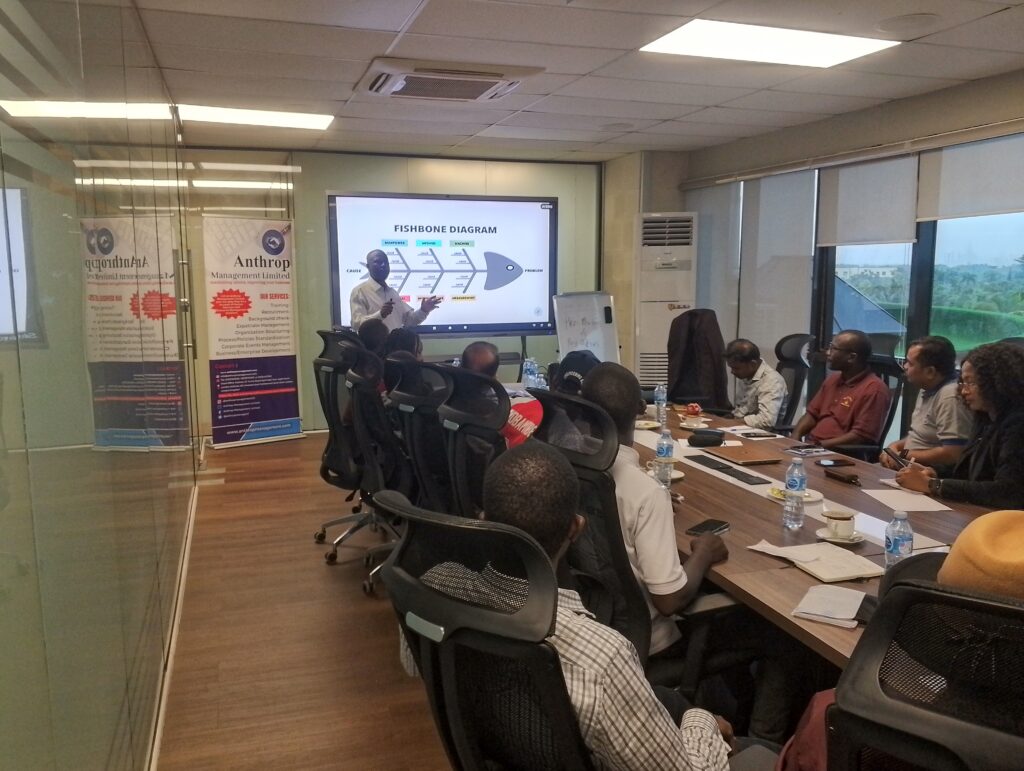
Why Leadership Training Is Important in Nigeria
Running a business in Nigeria comes with its own unique challenges. Power supply issues, changing exchange rates, multiple taxes, and a fast-changing market mean that businesses need strong leaders who can think fast and adapt.
Here’s why leadership in Nigeria needs to be intentional, not accidental:
- The business environment changes fast. Leaders who are trained can adjust quickly instead of panicking.
- Staff turnover is high. Good employees leave companies because of bad managers, not bad salaries. Training your leaders helps you keep your best people.
- Regulatory bodies are paying more attention to workplace standards. This makes training compliance in Nigeria something businesses can no longer ignore, especially for companies working with government contracts, NGOs, or international partners.
- Competition is growing. More businesses are opening every day. The ones with strong leadership pull ahead of the ones without it.
A Lagos-based retail company we know struggled for years with staff leaving every few months. After training their store managers on leadership and people skills, staff turnover dropped by more than half within one year. That’s the power of leadership training for businesses in Nigeria.
Also read: Executive Leadership Training in Nigeria.
The 5 Importance of Leadership Training
Let’s go straight into the main reasons every business owner should care about this.
1. It Improves Staff Retention
People don’t quit companies. They quit bad bosses. When a manager doesn’t know how to communicate, appreciate staff, or handle disagreements, employees get frustrated and start looking for new jobs.
Leadership training teaches managers how to:
- Listen to their team
- Give helpful feedback instead of harsh criticism
- Recognise good work
- Treat people with respect, even under pressure
When staff feel respected and heard, they stay longer. This saves your business money, because hiring and training new staff again and again is expensive.
2. It Boosts Productivity
A well-trained leader knows how to organise work, set clear goals, and get the best out of their team. Instead of confusion and wasted time, everyone knows what to do and why it matters.
For example, a manufacturing company in Aba trained its supervisors on basic leadership skills. Within three months, production delays reduced because supervisors learned how to plan better and solve problems on the floor instead of waiting for approval from above.
3. It Reduces Costly Mistakes
Untrained leaders often make decisions based on guesswork or emotion. This can lead to:
- Wrong hiring decisions
- Poor handling of customer complaints
- Wasted resources
- Legal or compliance issues
Leadership training and development helps managers think clearly, follow proper processes, and make decisions that protect the business. This is also tied closely to training compliance in Nigeria, since many industries now require documented proof that staff and managers have received proper training.
4. It Prepares Your Business for Growth
Every business owner wants to grow. But growth brings new challenges more staff, more branches, more customers to manage. If your current leaders can’t handle a small team well, they definitely can’t handle a bigger one.
Leadership training builds people who can grow with your business. Instead of hiring new leaders from outside every time you expand, you can promote from within, because your team already has the skills.
5. It Builds a Stronger Company Culture
Leadership sets the tone for the entire organisation. If your leaders are disciplined, respectful, and focused, that energy spreads through the whole company. If they are disorganised or harsh, that spreads too.
Leadership training for businesses in Nigeria helps create a culture where people feel motivated to do their best. This directly affects customer service, teamwork, and how the public sees your brand.
Key Factors That Affect Leadership Training Success
Not all leadership training works the same way. A few things determine whether it actually makes a difference:
- Relevance: Training must match real challenges your leaders face, not generic textbook theory.
- Consistency: One workshop is not enough. Leadership skills grow with regular practice and follow-up.
- Support from ownership: If business owners don’t back up the training with action, staff will not take it seriously.
- Local context: Training that understands the Nigerian business environment works better than training copied from other countries without adjustment.
Common Mistakes Businesses Make
Many Nigerian businesses want to improve their leadership but make avoidable mistakes along the way. Here are the common ones:
- Treating training as a one-time event. Leadership growth needs continuous learning, not a single seminar.
- Only training top executives. Middle managers and team leads interact with staff daily. They need training too.
- Ignoring training compliance in Nigeria. Some industries have specific training requirements. Skipping this can lead to penalties or lost contracts.
- Choosing generic, non-practical training. Training that doesn’t relate to real work situations gets forgotten quickly.
- Not measuring results. Businesses often train staff but never check if performance actually improved afterward.
- Promoting people to leadership roles without any training at all. Being good at your job doesn’t automatically mean you know how to lead others.
Step-by-Step Guide to Starting Leadership Training in Your Business
- Identify your current leaders and future leaders. Look at managers, supervisors, and high-potential staff.
- Assess their weak areas. Talk to staff, review performance, and find out where leaders struggle most.
- Choose the right training partner. Work with a consulting firm that understands the Nigerian business landscape.
- Set clear goals. Decide what success looks like better staff retention, fewer errors, improved communication, etc.
- Train consistently. Plan regular sessions, not just a one-off event.
- Follow up and measure progress. Check in after a few months to see what has changed.
Practical Example: A Nigerian Business Case Study
Let’s look at a simple, real-world type of scenario.
The Problem: A logistics company in Port Harcourt had three branch managers. Each one ran their branch differently. Staff complained of favouritism, poor communication, and unclear instructions. Two good drivers resigned within one month, and customer complaints increased.
The Solution: The company invested in leadership training for their branch managers. The training covered communication, conflict resolution, and how to give clear instructions. After the training:
- Staff complaints reduced significantly
- Communication between branches improved
- No further resignations were recorded in the following quarter
- Customer complaint response time improved
This shows exactly how leadership training for businesses in Nigeria can turn things around, sometimes within just a few months.
Benefits of Leadership Training for Business Growth
To sum up the real benefits in simple terms:
- Happier staff who stay longer and work harder
- Fewer costly mistakes from managers who now think before acting
- Smoother operations because leaders know how to plan and organise
- Stronger company reputation because customers notice good leadership through good service
- Easier business growth because you have leaders ready to handle bigger responsibilities
Frequently Asked Questions (FAQ)
What is leadership training?
Leadership training is a structured programme that teaches managers and team leads how to guide people, make decisions, communicate well, and handle workplace challenges effectively.
How does leadership training work in Nigeria?
In Nigeria, leadership training usually combines practical workshops, real business case studies, and follow-up coaching. It is designed to fit local business challenges like staff management, compliance, and fast-changing markets.
How much does leadership training cost in Nigeria?
The cost depends on the size of your team, the training format (in-person or online), and how long the programme runs. It can range from a modest amount for a short workshop to a higher investment for a full development programme. It’s best to speak with a consultant for a quote based on your specific needs.
Why is leadership training important?
It helps reduce staff turnover, improves productivity, prevents costly mistakes, and prepares your business for growth. Simply put, better leaders mean a better business.
Who needs leadership training?
Any business with managers, supervisors, or team leads needs it from small businesses with just a few staff to large companies with multiple branches. Even future leaders being groomed for promotion benefit from early training.
Is leadership training only for big companies?
No. Small and medium businesses benefit even more, because one bad manager in a small company can affect a much bigger percentage of the total staff.
Conclusion
Leadership training is not a luxury it’s a necessity for any business that wants to grow in Nigeria’s competitive market. From keeping good staff to avoiding costly mistakes, the 5 importance of leadership training we covered show just how much it affects your bottom line.
Good leaders don’t just happen. They are built through the right training, consistent support, and real-world practice. If you want your business to grow stronger, start by investing in the people who lead your team.
Ready to Build Stronger Leaders in Your Business?
Our team provides HR consulting, recruitment, payroll, and compliance support for businesses in Nigeria. We also design and deliver practical leadership training and development programmes built for the Nigerian business environment. Contact us today to get started.
Reference
- Harvard Business Review — (leadership development articles)
- SHRM (Society for Human Resource Management)
- Nigeria’s National Bureau of Statistics
- Chartered Institute of Personnel Management of Nigeria (CIPM)
- McKinsey & Company — leadership and organisational research