
Table of Contents
What Is the Value of Background Checks for HR Management?
The value of background checks for HR management is simple: they protect your business from hiring the wrong person. A background check confirms that a job applicant is who they say they are, that their qualifications are real, that their work history is accurate, and that they have no history that would make them a risk to your business, your customers, or your colleagues.
In Nigeria, background checks are more important than many business owners realise. Fake certificates are common. Exaggerated work histories are widespread. And the cost of a bad hire in lost money, damaged reputation, or legal trouble can be enormous. This guide explains what a background check in HR is, why it matters for Nigerian businesses, how employment background verification is done, and how to start using it in your hiring process today.
What Is a Background Check in HR? A Simple Explanation
A background check in HR is a process that an employer uses to verify information about a job applicant before offering them a position. It is like doing your homework before making an important decision.
Imagine you want to buy a second-hand car. Before you pay, you check the engine, look at the service history, confirm the papers are genuine, and ask the owner a few questions. You would not buy a car without doing those checks. Hiring a person should work the same way. Before you invest your company’s time and money in a new employee, you verify that everything they have told you is true.
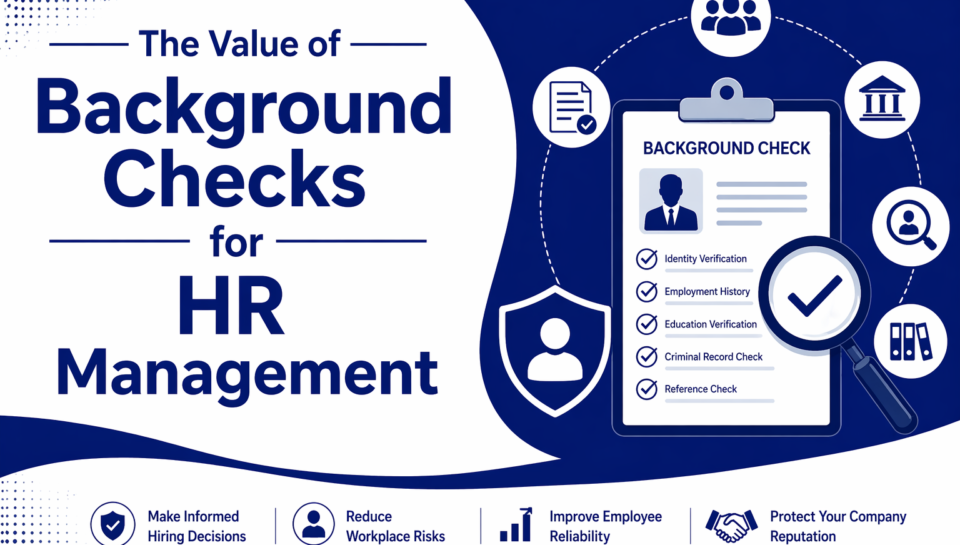
An employee background check typically looks at several things. It checks academic certificates to confirm they are real. It contacts previous employers to confirm the candidate actually worked there. It checks criminal records for roles involving money or security. It verifies the person’s identity using their National Identification Number (NIN) or Bank Verification Number (BVN). And it may check professional references to understand how the person actually performed in past roles.
A background check is not about distrust. It is about due diligence. It protects your business, your existing staff, and your customers from the consequences of a hiring decision made without adequate information.
Why Background Checks Are Especially Important in Nigeria
Certificate fraud is a well-documented problem in the Nigerian job market. Fake university degrees, forged NYSC certificates, and fabricated professional qualifications are not rare. They are common enough that most experienced HR professionals in Lagos have personally encountered them.
This is not the only risk. Candidates also misrepresent their work history. They inflate their job titles, extend the dates of their employment, and claim responsibilities they never actually held. Some list references who are friends rather than former managers. Without a proper background verification process, these misrepresentations are invisible to the hiring team.
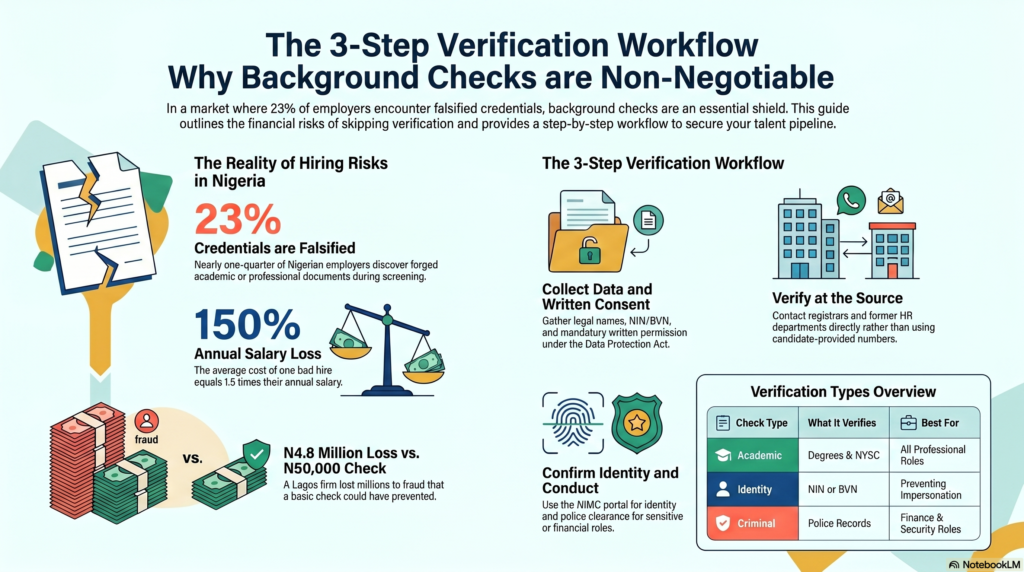
>> A 2022 survey by an HR network in Lagos found that 23% of Nigerian employers had discovered falsified academic or professional credentials during pre-employment screening — HR Nigeria Network Survey, 2022.
>> SHRM research found that companies that conduct thorough background checks are 76% less likely to make a hiring mistake that results in termination within the first year — SHRM, 2023.
>> According to a Gallup report, the average cost of a bad hire in Nigeria and similar emerging markets can reach up to 150% of the employee’s annual salary when you account for recruitment, onboarding, lost productivity, and replacement costs — Gallup, 2023.
In Nigeria’s financial services, healthcare, education, and logistics sectors, a single hire without a background check can expose your organisation to fraud, reputational damage, and in some cases, criminal liability.
Types of Employee Background Checks Used in HR Management
Not every background check covers the same things. The type of check you run depends on the role you are hiring for and the level of risk involved. Here is a clear breakdown of the most common types used in Nigerian HR management:
| Type of Check | What It Verifies | Why It Matters |
| Academic credentials | Degrees, certificates, and qualifications | Protects against fake certificates — common in Nigeria |
| Employment history | Previous roles, dates, and reasons for leaving | Confirms experience claims are accurate |
| Professional references | Character and work performance from past managers | Gives you a real picture of how the person works |
| Criminal record check | Police clearance or court records | Essential for finance, security, and trust roles |
| Identity verification | NIN, BVN, or government-issued ID | Confirms the person is who they say they are |
| Credit check | Financial history and outstanding debts | Relevant for roles that handle money |
For most professional roles in Nigeria, academic verification, employment history confirmation, and reference checks are the minimum standard. For roles in finance, security, or childcare, criminal record checks and identity verification are essential additions. The higher the responsibility of the role, the more thorough the background check should be.
How Is Background Verification Done by HR in Nigeria?
Many business owners want to know how to do an employment background check and the honest answer is that it depends on how deep you need to go. Here is how the process typically works in Nigerian HR management, from the simplest checks to more thorough verification:
STEP 1: Collect the candidate’s information
Before any check can be done, you need the candidate’s full legal name, date of birth, NIN or BVN, the names of their previous employers, the contact details of their references, and copies of their academic certificates and professional qualifications. Get this information in writing as part of the application or offer process.
STEP 2: Verify academic credentials
Contact the institution that issued each certificate directly not through the candidate. For Nigerian university degrees, you can contact the relevant institution’s registrar or use the West African Examinations Council (WAEC) online result checker for secondary school certificates. For professional qualifications, contact the issuing body directly. This step alone catches the majority of certificate fraud in Nigeria.
STEP 3: Confirm employment history
Contact each previous employer listed on the candidate’s CV. Speak to HR or a former line manager not a number provided by the candidate. Confirm the job title, dates of employment, key responsibilities, and whether the person is eligible for rehire. Ask a simple, direct question: Would you employ this person again? The answer tells you a lot.
STEP 4: Conduct reference checks
Call each professional reference provided by the candidate. Ask structured questions about the candidate’s performance, reliability, how they handled pressure, and how they got on with colleagues and managers. Do not rely on written reference letters they are easy to fabricate. A phone call is far more revealing.
STEP 5: Run identity verification
Use the candidate’s NIN or BVN to confirm their identity through the National Identity Management Commission (NIMC) portal or through your bank. For senior or sensitive roles, a police clearance certificate from the Nigeria Police Force is a reasonable requirement.
STEP 6: Run a credit check for financial roles
For roles that involve handling cash, managing accounts, or controlling budgets, a credit check through a licensed credit bureau in Nigeria gives you a picture of the candidate’s financial history. A candidate with serious unresolved debts in a cash-handling role is a risk your business does not need to take.
STEP 7: Document everything and make your decision
Keep a written record of every check you conducted, what you found, and the decision you made. This protects the business if the hiring decision is later questioned. Make your final offer only after all checks are complete not before.
A Real Business Example: What Happens When You Skip Background Checks
REAL BUSINESS EXAMPLE: Financial services firm in Lagos loses N4.8 million to unverified hire
A mid-sized financial advisory firm in Lagos hired a senior accounts manager based on an impressive CV, a confident interview, and two glowing written references. The firm did not verify his degree certificate, did not call his previous employers, and did not request a police clearance. He presented a certificate from a reputable Lagos university and claimed seven years of experience at two well-known firms.Within eight months of joining, an internal audit discovered that the new manager had been approving fictitious vendor invoices and diverting payments to a personal account. Total losses amounted to N4.8 million. When HR investigated, they found his degree was forged, his previous employers had no record of him, and his written references had been written by personal contacts not former managers. A police clearance check would have revealed a prior fraud conviction.The firm engaged Anthrop Management Limited to redesign their hiring process. A full background verification framework was put in place for all roles at officer level and above. In the two years since, no similar incident has occurred.
The cost of that background check verified credentials, reference calls, and a police clearance would have been less than N50,000. The cost of not doing it was N4.8 million plus legal fees, lost time, and serious reputational damage with clients.
The Real Benefits of Background Checks for HR Management in Nigerian Businesses
When you build background verification into your hiring process, you are not just checking boxes. You are actively protecting and strengthening your business. Here is what consistent background checking delivers:
– You hire people you can trust. When you know a person’s credentials are genuine and their history is what they claimed, you start the employment relationship with confidence. That confidence is good for the whole team.
– You reduce fraud and theft risk. Businesses in Nigeria that hire without verifying identities and histories are significantly more exposed to internal fraud. Background checks are one of the most cost-effective fraud prevention tools available.
– You protect your existing staff. A person with a history of workplace harassment or misconduct who slips through without a check can damage your team’s culture and safety. Background verification protects the people already working for you.
– You protect your customers. If your staff interact with clients, handle client money, or manage client data, the integrity of those staff members directly affects your client relationships. A background check is part of your duty of care to the people your business serves.
– You strengthen your HR management process. Consistent background verification signals to candidates and staff alike that your organisation takes hiring seriously. It raises the standard of your talent pipeline over time.
– You reduce costly rehiring. Bad hires are expensive. When background checks reduce the likelihood of a bad hire, they directly reduce the time, money, and management attention spent on replacing people who should never have been hired.
>> Companies that implement structured background verification processes report a 40% reduction in employee misconduct incidents within the first year Association for Talent Development, 2023.
Common Background Check Mistakes Nigerian Businesses Make
Even businesses that run background checks sometimes do them wrong. Here are the most common mistakes to avoid:
– Only checking candidates for senior roles. Fraud, theft, and misconduct can happen at any level. A junior cashier with a false identity or a hidden criminal record is just as much a risk as a senior manager with a fake degree. Run checks at all levels, and adjust the depth based on the role’s access to money, data, or people.
– Accepting written references without calling anyone. A printed reference letter is easy to forge in Nigeria. The only reference check that has real value is a live conversation with a named former manager or HR contact at a verifiable organisation. Always pick up the phone.
– Running the check after the person has already started work. This is a very common mistake in Nigerian businesses. The candidate starts on a provisional basis while checks are pending and then the checks reveal a problem after the person has already been given access to systems, money, or client data. Always complete checks before the start date.
– Not getting the candidate’s written consent before checking. Under the Nigeria Data Protection Act 2023, you must inform candidates that you will be running background checks and get their written consent before you begin. This protects the business legally and is also simply the right thing to do.
– Not documenting the process. If a hiring decision is later challenged and you have no record of what checks you ran, what you found, and what decision you made, you have no defence. Keep clear records of every check for every hire, stored securely for at least six years.
– Using the same verification depth for every role. A customer service representative and a finance director do not need the same level of background verification. Match the depth of the check to the risk level of the role. Use a tiered approach and apply your most thorough checks where the risk is highest.
Also read: 5 Most Common HR Compliance Mistakes
5 Leading HR Consulting Firms in Nigeria Specialising in Labour Law Compliance
Frequently Asked Questions About Background Checks in HR Management
What is a background check in HR?
A background check in HR is a pre-employment verification process. It confirms that a job applicant’s qualifications, employment history, identity, and where relevant criminal record are accurate and genuine. It is done before a formal job offer is confirmed.
What is an employee background check?
An employee background check is the same process applied specifically to individuals who are being considered for employment. It typically covers academic credentials, work history, professional references, and identity. For sensitive roles, it may also include criminal record and credit checks.
How is background verification done by HR in Nigeria?
HR conducts background verification in Nigeria by contacting academic institutions to verify certificates, calling previous employers to confirm employment history, speaking directly to professional references, checking identity using NIN or BVN through NIMC, and requesting police clearance for roles involving significant trust or financial access. The process is done with the candidate’s written consent.
How do you do an employment background check in Nigeria?
To do an employment background check in Nigeria, start by collecting the candidate’s full details and written consent. Then verify their academic certificates with the issuing institution, confirm their employment history by contacting previous employers directly, call their professional references, and verify their identity through NIMC or their bank. For financial roles, add a credit bureau check. Document every step.
How much does a background check cost in Nigeria?
The cost of a background check in Nigeria varies depending on the depth of the check. A basic check covering credentials and employment history typically costs between N15,000 and N50,000 per candidate. A more thorough check including criminal records and credit verification can cost N50,000 to N120,000. Professional HR firms like Anthrop Management Limited include background verification as part of their recruitment service.
Who needs background checks in Nigerian businesses?
Every person being hired into any role that involves access to money, client data, company systems, or vulnerable individuals should be background-checked. This includes finance staff, HR officers, sales staff who handle cash or client accounts, security personnel, drivers, IT administrators, and any role with management responsibility. Background checks are not only for senior positions.
Can Anthrop Management Limited conduct background checks for my business?
Yes. Anthrop Management Limited conducts background verification as part of its recruitment and HR management services for businesses across Lagos and Nigeria. We verify academic credentials, employment history, professional references, and identity and can coordinate criminal record checks for roles that require them. Contact us to discuss how we can build background verification into your hiring process.
Protect Your Business With Professional Background Checks
Our team at Anthrop Management Limited provides HR consulting, recruitment, background verification, payroll management, and compliance support for businesses across Lagos and Nigeria. We conduct thorough, professional employee background checks as part of every recruitment process we manage.
Learn more about our human resource management services in Lagos, Nigeria. Whether you are hiring one person or building a full team, we make sure every candidate is exactly who they say they are before they start work.
Conclusion: The Value of Background Checks for HR Management Is Clear
Background checks are one of the simplest and most cost-effective investments a Nigerian business can make in its hiring process. They protect you from fraud, prevent bad hires, safeguard your existing team, and give you confidence that the people working in your business are who they say they are.
The value of background checks for HR management goes beyond just finding problems. It builds a hiring process that is disciplined, consistent, and professional. Over time, that process builds a workforce that is more trustworthy, more stable, and more aligned with your business values.
In a Nigerian business environment where certificate fraud is documented, where credential misrepresentation is common, and where the cost of a bad hire can run into millions of naira, skipping background verification is not a small risk. It is a large one.
Anthrop Management Limited can help you build a background verification process that is thorough, legally compliant, and practical for your business size and budget. Contact us today.
References
1. HR Nigeria Network — Pre-Employment Screening Survey 2022
2. SHRM — Background Screening and Hiring Outcomes Research 2023
3. Gallup — The Cost of a Bad Hire in Emerging Markets 2023
4. Association for Talent Development (ATD) — Workforce Integrity and Verification Report 2023
5. Nigeria Data Protection Act 2023
6. National Identity Management Commission (NIMC) — NIN Verification Guidelines,
7. West African Examinations Council (WAEC) — Certificate Verification Portal
8. Nigeria Police Force — Police Clearance Certificate Process
9. Labour Act Cap L1, Laws of the Federation of Nigeria 2004
10. PwC Nigeria — Workforce Integrity and Internal Fraud Survey 2022