
Table of Contents
Introduction
If you run a business in Nigeria, you spend money to get things done. You need chairs for your office, raw materials to make your goods, or software to help your staff work faster. Many people call all of this “buying.” But in the business world, there is a big difference between simply buying things and a process called procurement.
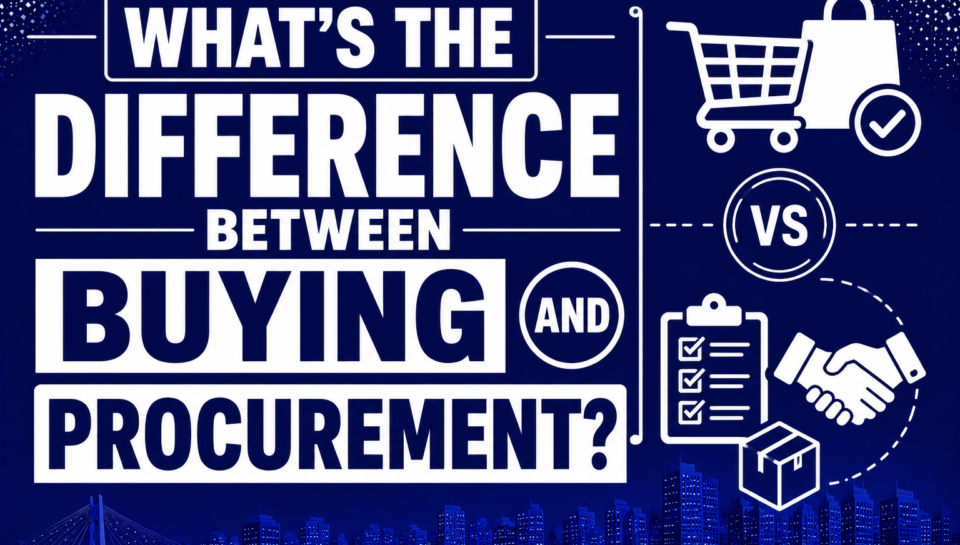
So, what’s the difference between buying and procurementurement? Buying is just the simple act of paying money to get something. Procurement is the whole journey. It includes planning what you need, finding the best people to supply it, talking about the price, checking the quality, and making sure the item arrives safely.
Knowing the differences between buying and procurement can save your Nigerian business a lot of money. It can stop you from buying fake items or wasting time. In this post, we will break this down in very simple words. We will show you why it matters for your business here in Nigeria.
What This Means in Simple Terms
Let us use a very easy example. Imagine you are hungry. You walk to a roadside seller, give them two hundred Naira, and buy a plate of rice. That is buying. It is fast. You see the food, you pay, you eat. The deal is done in one minute.
Now, imagine you are opening a big restaurant in Lagos. You cannot just walk to the street every day to buy rice for 500 customers. You need to sit down and think. How much rice do I need every month? Which farmer grows the best rice? Can they deliver it every week? Will they give me a discount if I buy in bulk? What happens if the rice is bad when it arrives?
That whole process of thinking, planning, finding the farmer, and making a safe deal is called procurement. Buying is just one small part of procurement.
What is Buying?
Buying is very straightforward. It is a transaction. A transaction means you give money, and someone gives you an item.
When you buy something, you usually do not spend weeks planning it. You do not write long agreements. You just need the item right now.
Here are some examples of buying in a Nigerian business:
- Your office runs out of bottled water. You send an office boy to the supermarket to buy two cartons.
- Your printer stops working. You go to Computer Village in Lagos to buy a new printer cable.
- You need pens for a meeting happening in one hour. You buy them from the street hawker outside your office.
In all these examples, the goal is speed. You do not have time to plan. You just want the item so that work can continue. Buying focuses mostly on price and speed. You want to pay a fair price, and you want the item right away.
What is Procurement?
Procurement is much bigger than buying. It is a smart way of getting what your business needs. When you do procurement, you are not just looking at the price tag. You are looking at the value.
Value means getting the best quality for a good price, at the right time, from a trusted person.
Procurement involves many steps. Before you even spend one Naira, you are already working. You are doing research. You are making rules for how your business will buy things. This whole system is called procurement management.
Here is what procurement looks like:
- Planning: You figure out exactly what you need. Not just “we need chairs,” but “we need 20 plastic chairs that can last for 3 years.”
- Searching: You look for different sellers. You do not just use the first seller you see.
- Comparing: You check their prices. You check if they can deliver on time.
- Talking: You negotiate. This means you ask them to lower the price or give you a better deal.
- Agreeing: You write down the rules. This is called a contract. It says what happens if the seller brings bad items.
- Receiving: You check the items carefully before you pay the full money.
Subscribe to get exclusive insights you won’t find anywhere else.
What’s the Difference Between Buying and Procurement?
Let us look at the main differences between buying and procurement. This will help you see why one is just a quick action, and the other is a smart business plan.
- Time: Buying takes a few minutes or hours. Procurement takes days, weeks, or even months.
- Goal: Buying just wants to get the item fast. Procurement wants to get the best value and build a good relationship with the seller.
- Rules: Buying does not have strict rules. Any staff member can buy small things. Procurement has strict steps. Only approved people can do it, and they must follow company rules.
- Paperwork: Buying might just need a simple receipt. Procurement needs purchase orders, contracts, and official invoices.
- Risk: Buying has small risks. If you buy a bad pen, it is not a big deal. Procurement handles big risks. If you buy the wrong raw materials for your factory, you could lose millions of Naira.
Why Procurement in Nigeria is Very Important
Running a business in Nigeria comes with special challenges. This is why Procurement in Nigeria needs extra care and smart thinking.
In Nigeria, we deal with things like changing exchange rates, bad roads, and sometimes fake products in the market. If you just use simple buying for your big business needs, you can lose a lot of money.
Imagine you run a soap factory in Aba. You need Palm Kernel Oil. If you just send a truck to the market to “buy” oil, what happens?
- The price might have doubled because of the dollar rate.
- The seller might mix water inside the oil to make more profit.
- The truck might break down on the bad road, and your factory stops working.
But if you use proper Procurement Management in Nigeria, you avoid these problems. You will sign a contract with a trusted supplier in Akwa Ibom. The contract will say the price is fixed for six months. You will have a lab test the oil before you pay. You will plan the truck route to avoid bad roads.
This is why procurement is a lifesaver for Nigerian businesses. It protects your money and keeps your business running smoothly.
How HR Consulting Nigeria Helps Your Buying Process
You might be wondering, “What does getting staff have to do with buying things?” The truth is, everything.
Your staff are the ones who buy things for your business. If you do not have good staff, your procurement will fail. People might steal money, take bribes from sellers, or make lazy choices. This is where HR consulting Nigeria comes in.
As an HR consulting firm, we help you put the right people in charge of your money. We help you train your staff on how to buy things wisely. We help you create rules so that one person cannot just take company money and buy bad items.
We also help you hire expert procurement officers. These are people whose only job is to make sure your business gets the best deals.
Learn more about our human resource services in Lagos Nigeria to see how we can help you build a strong, honest team.
Step-by-Step Guide to Good Procurement Management
If you want to stop wasting money and start using procurement management, here is a simple guide. Follow these steps like a recipe.
Step 1: Know what you need.
Do not just guess. If your staff say they need laptops, ask them why. What will they use it for? Do they need big screens or small ones? Write down exactly what you need. This is called a “purchase request.”
Step 2: Look for good sellers.
Do not just use one seller. Ask other business owners for recommendations. Search online. Find at least three different people or companies that sell what you need.
Step 3: Ask for their prices.
Tell the three sellers what you need. Ask them to give you a written price. This is called a “quote.” Make sure they include the cost of delivering it to your office.
Step 4: Pick the best one.
Do not just pick the cheapest one. The cheapest might be the worst quality. Look at the price, the quality, and how fast they can bring it. Pick the one that gives your business the best overall value.
Step 5: Make it official.
Write an agreement. It does not have to be a long document from a lawyer if it is a small purchase. But write down what you are buying, the price, the delivery date, and what happens if they bring the wrong item.
Step 6: Check the item carefully.
When the item arrives, do not pay immediately. Check it. Count it. Test it. Make sure it is exactly what you ordered. If it is good, then you approve the payment.
A Real Nigerian Business Scenario
Let us look at a practical example. This will show you how buying and procurement work in real life.
The Business: Mr. Tunde owns a medium-sized bakery in Ibadan. He bakes bread and cakes.
The Problem (Using Buying):
Every Monday, Mr. Tunde gives his driver fifty thousand Naira to buy flour and sugar from the open market.
One week, the driver buys cheap, low-quality flour because he wants to keep the change. The bread comes out flat and tastes bad. Customers complain. The next week, the price of sugar jumps up suddenly. Mr. Tunde did not plan for this, so he loses his profit. He is always stressed because he does not know how much his raw materials will cost next week.
The Solution (Using Procurement):
Mr. Tunde decides to change his ways. He sits down and calculates how much flour and sugar he uses every month. He reaches out to three big wholesale distributors in Lagos. He asks for their prices. He finds out that Distributor A gives the best quality flour and will deliver straight to Ibadan every Friday.
Mr. Tunde signs a 6-month contract with Distributor A. The price is fixed. It will not change even if the market price goes up next week. Mr. Tunde also sets a rule: his quality checker must test the flour before the accountant pays the bill.
The Result:
Mr. Tunde’s bread quality becomes the best in Ibadan. He knows exactly how much his ingredients will cost for the next six months. His stress goes down, and his profit goes up. That is the power of moving from buying to procurement.
How This Helps Your Business Grow
Understanding the differences between buying and procurement is not just about sounding smart. It actually helps your business grow in many ways.
- You save money: When you plan and compare prices, you stop overpaying. You also avoid buying things you do not really need.
- You get better quality: Good materials make good products. If you procure high-quality items, your customers will love what you sell.
- You stop fraud: When you have strict procurement rules, it is very hard for staff to steal money or collect bribes.
- You can plan better: When you know your exact costs for months ahead, you can plan your business growth. You can safely borrow money from the bank because your numbers are stable.
- You build strong friendships: Good procurement means you build good relationships with trusted suppliers. When things are scarce in Nigeria, your supplier will make sure you get your items first because you are a good customer.
Common Mistakes to Avoid
Many Nigerian businesses make mistakes when they try to move from simple buying to procurement. Here are six common mistakes you must avoid:
1. Not writing things down:
If you just make verbal agreements over the phone, you will have problems. If the seller brings the wrong item, they can deny it. Always get written quotes and receipts.
2. Using only one supplier forever:
Even if a supplier is good, you should have a backup. What if their factory burns down? What if they travel out of the country? Always have at least two trusted suppliers for important items.
3. Letting one person do everything:
If one person chooses the supplier, picks up the goods, and pays the money, you are inviting trouble. Separate the duties. Let Person A find the supplier. Let Person B check the goods. Let the accountant pay the money.
4. Focusing only on the cheapest price:
Cheap can be very expensive in the long run. If you buy cheap shoes for your security guards, they will tear in one week. Then you have to buy new shoes. It is better to buy slightly more expensive shoes that last for one year.
5. Ignoring delivery costs:
Sometimes an item looks cheap until you add the cost of transporting it to your state. Always ask for the “total landed cost.” This means the price of the item plus the delivery fee.
6. Forgetting to track performance:
Do not just buy and forget. Keep a record of how each supplier performs. Are they always late? Do they bring bad items sometimes? Write this down so you know who to use next time.
Subscribe to get exclusive insights you won’t find anywhere else.
Frequently Asked Questions (FAQs)
What is the difference between buying and procurement?
Buying is the quick act of paying money for an item you need right now. Procurement is the long process of planning, finding the best suppliers, checking quality, and making safe deals to get the best value for your business.
How does procurement management work in Nigeria?
In Nigeria, procurement management works by carefully planning for local challenges. It involves finding trusted suppliers, writing contracts to protect against sudden price changes, and checking goods strictly to avoid fake or low-quality items.
How much does it cost to set up procurement?
It does not have to cost a lot of money. For a small business, it just costs your time to write down rules and compare prices. For bigger businesses, you might need to buy simple software or hire an expert, which can cost from a few hundred thousand Naira.
Why is procurement important?
It is important because it saves your business money. It stops waste, prevents staff from stealing, ensures you get good quality materials, and helps you plan your business finances safely.
Who needs procurement management?
Any business that spends money regularly needs it. Even a small restaurant or a fashion boutique needs it. But it is extremely important for big businesses, factories, and schools that buy things in large quantities.
Conclusion
Running a successful business in Nigeria is not easy. You have to be very smart with every Naira you make. Now that you know what’s the difference between buying and procurement, you have a big advantage.
Stop just handing out cash to buy things quickly. Start planning. Start comparing sellers. Start writing down agreements. When you treat your business expenses as a serious process, you will see your profits grow. Good procurement management is like a shield. It protects your money and helps your business stand strong, no matter what happens in the Nigerian market.